Updated monthly · Last reviewed: October 2026
Methodology panel review · Updated monthly (October 2026)
Bid planning, WBS, and effort estimation
Bid planning software that turns RFP scope and gaps into WBS, roles, and effort. Dates come from planning rules, not from unconstrained model text.
Plans that can point at rows
Bid planning searches ('WBS from RFP', 'effort estimation') fail when the Gantt is a copied template. BidosAI compiles classified requirements and gaps into phased work. Dates come from planning rules and capacity.
If a task cannot name the requirement IDs that caused it, commercial review should send it back.
From gaps to work
- Requirement extraction and classification — Requirements are split into atomic rows, classified (security, SLA, integration, commercial, delivery), and given stable IDs so later matrix, gap, and plan artifacts point at the same row.
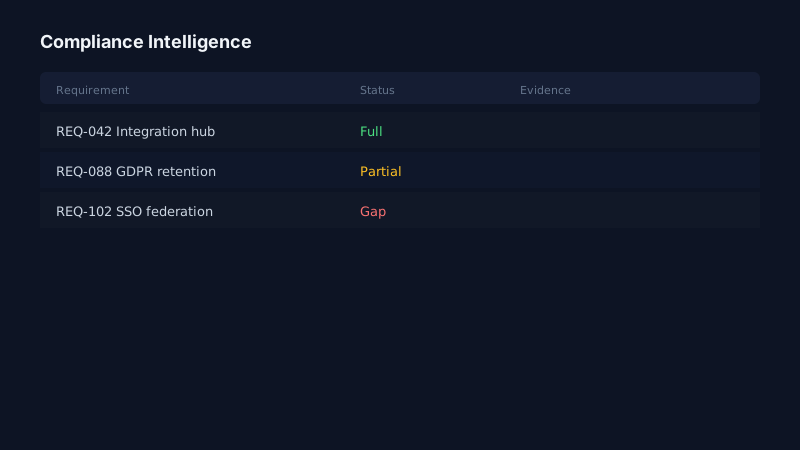
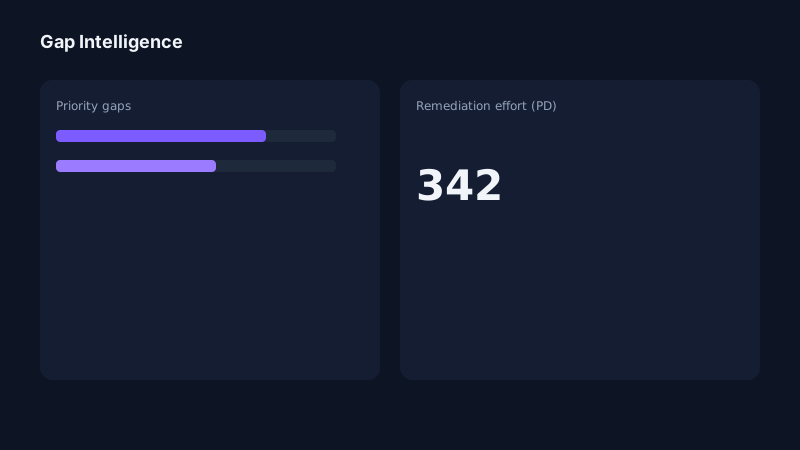
- Gap analysis — Unmatched or partial rows become a gap register with evidence paths and remediation notes for solution architects before price is locked.
- Bid planning and WBS — Scope and gaps compile into phased work, roles, and a schedule snapshot. Dates come from planning rules, not from free-form model text.
- Governance and deployment — SSO, role-based access, tenant isolation, audit events, and private-deployment patterns are available for regulated bid teams. Public pages do not claim a SOC 2 or ISO certificate.
Unmatched controls should become tasks or explicit exclusions. A pretty plan that ignores them is a plan for a different contract.
Phases, roles, and effort compiled from the current pack
Requirements + gaps → phases → roles/FTE → schedule snapshot
Methodology without rewriting scope
Waterfall, agile, and hybrid change phase order and overlap. They do not license anyone to drop annex requirements. Buffer fields that the scheduler does not apply should not be sold as magic.
Canonical modules: WBS planner, delivery estimation, explainable estimation, critical path.
What to inspect on a sample plan
- Tasks with requirement IDs
- Gap rows that became work or exclusions
- Roles that exceed known FTE
- Whether a target date warning appeared instead of silent compression
Those are operating measures for a workspace. They are not published customer results.
Public calculators versus workspace plans
The public effort tools are for conversation. A real bid plan uses ingested scope, named resources, and a versioned snapshot.
In this cluster
Related topic clusters
- RFP and proposal management software
- AI RFP analysis and requirement extraction
- Compliance matrix and response automation
- Proposal knowledge base and answer reuse
- Bid costing and commercial intelligence
- Bid qualification and gap analysis
- Industry-specific RFP solutions
- Competitor and alternative comparisons
- RFP templates, examples and practical guides
Product and research links
Worked example, not a measured result
The figures in older drafts of these pages described a fictional cohort. They have been removed. A workspace can show requirements, compliance rows, gaps, and assumptions for a package you upload. That screen is not a statistic about other customers.
Interactive resources
Delivery intelligence flow (expand)
RFP Package → Requirements → Compliance Matrix → Gap/WBS → Commercial Scenarios → Boardroom
ROI & calculators
Bid qualification ROI · Effort estimator · Live demo workspace
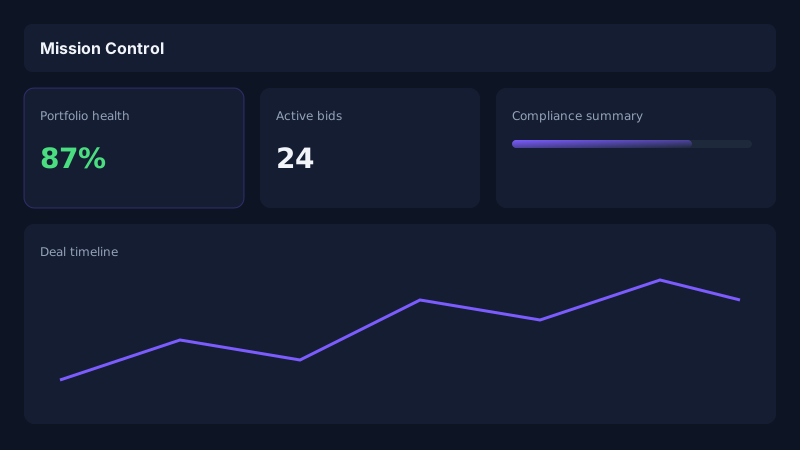
Product tour: Mission Control, compliance, and commercial intelligence — launch demo.
Product evidence

Related intelligence
Frequently asked questions
How does BidosAI estimate effort from an RFP?
Classified requirements and gaps compile into phased work. Scheduling uses planning rules and capacity, not unconstrained generated dates.
Is the WBS a generic template?
Templates can suggest phases. The tasks should still point at this pack's rows and unmatched controls.
Can we change methodology?
Waterfall, agile, and hybrid are supported as planning modes. The requirement set does not change when the calendar does.
Does the public estimator replace a workspace plan?
No. Public calculators are conversation tools. A live plan uses ingested scope and named resources.
What if the target date is impossible?
Feasibility warnings can surface. The engine does not quietly crush effort to hit a date.
Interactive product tour
Explore Mission Control and compliance intelligence in the public demo workspace — no signup required.
Try Interactive Demo