Updated monthly · Last reviewed: October 2026
Methodology panel review · Updated monthly (October 2026)
AI RFP analysis and requirement extraction
AI RFP analysis that extracts and classifies requirements from PDF, Word, and Excel packs. Atomic rows, source locators, and IDs — not a summary.
Analysis is a requirement graph
Teams search 'AI RFP analysis' hoping a model will read a 400-page pack. A summary that forgets annex B is a liability. BidosAI extraction produces atomic rows with source locators and classification so later views still point at the same ask.
If you cannot filter unmatched security rows, you did not analyze the pack. You skimmed it.
Formats and limits
PDF, DOCX, and Excel are in scope. Intake caps exist so a noisy scan cannot dominate the corpus. Pages without a text layer will not magically OCR themselves in the current intake path — say that in a demo rather than promising it.
Excel grids keep their scored rows. That matters because export has to land in the file evaluators will open.
What extraction is allowed to do
- Multi-document RFP intake — Upload PDF, Word, and Excel bid packs in one workspace. BidosAI extracts text, keeps source locators, and treats the pack as a single requirement set.
- Requirement extraction and classification — Requirements are split into atomic rows, classified (security, SLA, integration, commercial, delivery), and given stable IDs so later matrix, gap, and plan artifacts point at the same row.
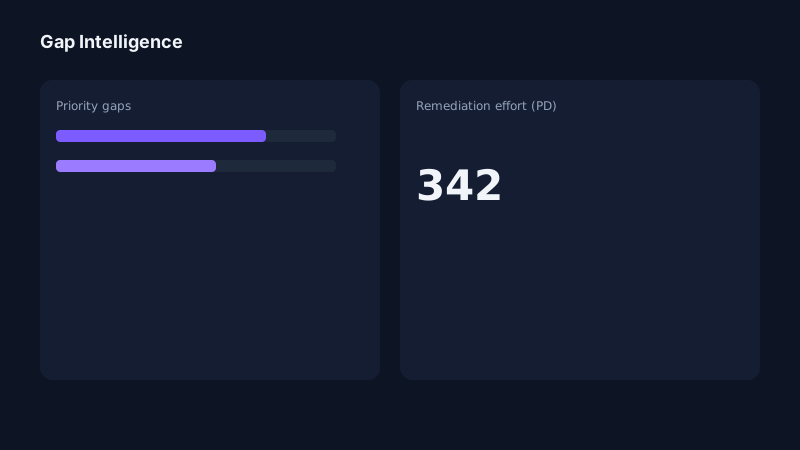
- Gap analysis — Unmatched or partial rows become a gap register with evidence paths and remediation notes for solution architects before price is locked.
- Governance and deployment — SSO, role-based access, tenant isolation, audit events, and private-deployment patterns are available for regulated bid teams. Public pages do not claim a SOC 2 or ISO certificate.
Compound sentences should become more than one row when they hide two controls. Ambiguities are listed instead of being promoted into invented scope.
IDs, category, locator, and confidence on extracted rows
Files → text → atomic rows → categories → stable IDs
How this cluster links to the product
The feature module is RFP Intelligence. The use-case page is requirement analysis. Those URLs remain canonical. This pillar exists for people who search the job ('analyze this RFP') rather than the module name.
Checks before you staff writers
- Share of rows with a locator
- Duplicate asks merged across annexes
- Unowned rows still sitting in the inbox
- Whether the Excel grid imported as scored rows
Those are operating measures for a workspace. They are not published customer results.
In this cluster
Related topic clusters
- RFP and proposal management software
- Compliance matrix and response automation
- Proposal knowledge base and answer reuse
- Bid planning, WBS and effort estimation
- Bid costing and commercial intelligence
- Bid qualification and gap analysis
- Industry-specific RFP solutions
- Competitor and alternative comparisons
- RFP templates, examples and practical guides
Product and research links
Worked example, not a measured result
The figures in older drafts of these pages described a fictional cohort. They have been removed. A workspace can show requirements, compliance rows, gaps, and assumptions for a package you upload. That screen is not a statistic about other customers.
Interactive resources
Delivery intelligence flow (expand)
RFP Package → Requirements → Compliance Matrix → Gap/WBS → Commercial Scenarios → Boardroom
ROI & calculators
Bid qualification ROI · Effort estimator · Live demo workspace
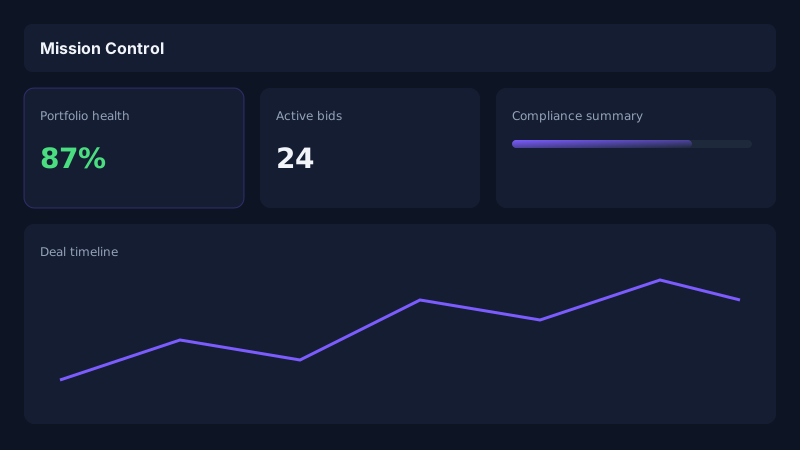
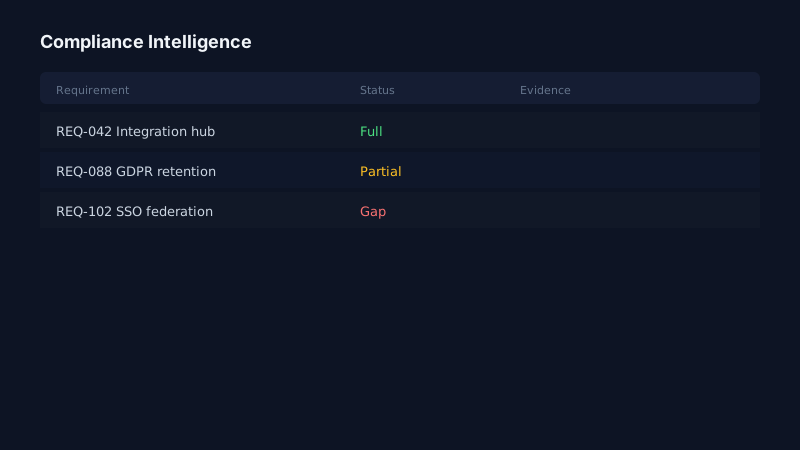
Product tour: Mission Control, compliance, and commercial intelligence — launch demo.
Product evidence

Related intelligence
Frequently asked questions
Is AI RFP analysis the same as summarizing the document?
No. Analysis here means atomic requirements with locators and IDs. A summary cannot drive a matrix.
Can BidosAI read Excel grids as well as PDF volumes?
Yes. Issuer grids are first-class. Column meaning has to survive if you expect to export into the same file.
What happens to duplicate asks across annexes?
Overlapping asks are merged where classification can justify it. You still see source locators for the surviving row.
Do you invent requirements that are not in the pack?
No. Extraction is bounded to ingested text. Ambiguities are flagged rather than silently added as scope.
Who owns a row after extraction?
A named reviewer. Unowned rows should not reach export.
Interactive product tour
Explore Mission Control and compliance intelligence in the public demo workspace — no signup required.
Try Interactive Demo