Updated monthly · Last reviewed: October 2026
Methodology panel review · Updated monthly (October 2026)
How to Analyze a Long RFP
A practical sequence for long, multi-file RFPs: separate the documents, extract requirements, then review before anyone prices the work.
Long RFPs fail in review when people start writing answers before they have a single list of obligations. This note is a practical sequence for a package that runs to hundreds of pages across several files. AI helps after that list exists. It does not make the reading optional.
Who should run this sequence
A pursuit lead owns the order. A subject-matter reviewer owns the rows in their domain. Someone who has not read the instructions to bidders should not be the only person marking status.
Steps
- Separate instructions, requirements, pricing schedules, and contract terms. They are different work.
- Extract requirements with a source pointer. In BidosAI this is the requirement list produced from the upload.
- Deduplicate only when two statements are the same obligation. Keep both IDs in a comment if you merge them.
- Mark mandatory language yourself. Words such as "shall" and "must" are clues, not a complete rule, because some RFPs define those words in the front matter.
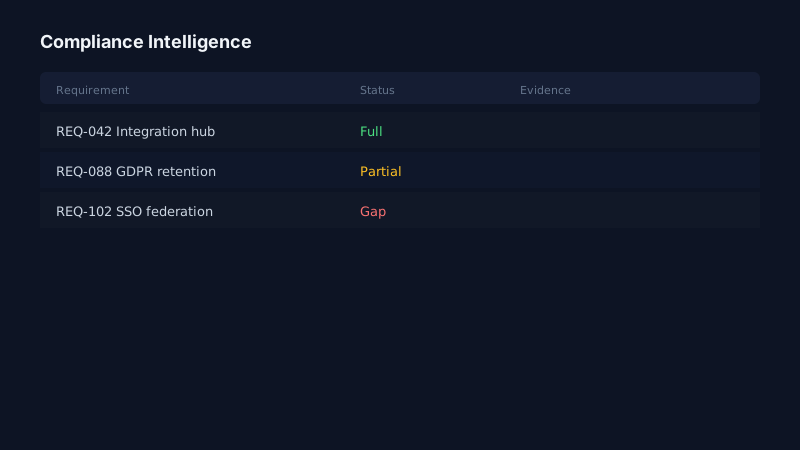
- Draft the compliance matrix from approved historical answers where the obligation matches. See the matrix guide.
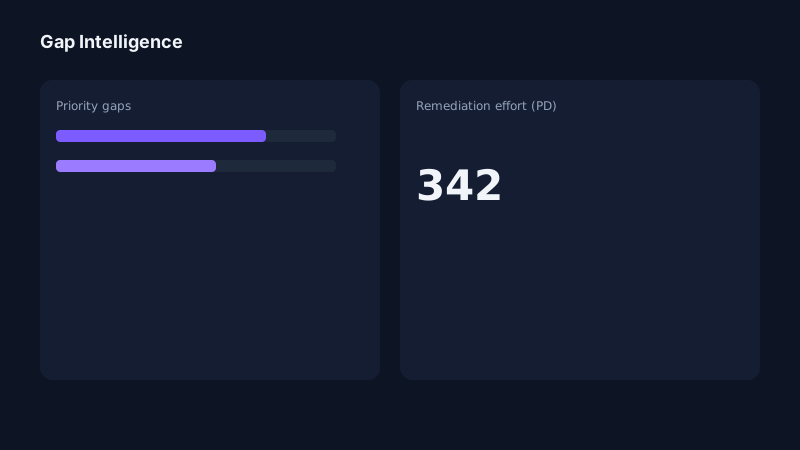
- List gaps before pricing. A gap that needs a partner or a build is a commercial input, not a footnote.
- Only then estimate effort. The effort guide starts from that gap list.
Example
A 400-page transformation RFP may contain a security appendix, a payments interface specification, and a service-credit schedule. Treat the service credits as commercial terms, not as product requirements. If extraction places them in the requirement list, move them and say why. That correction is the work. The software can propose the split. A reviewer has to confirm it.
Limitations
Public demo screens are precomputed. They are not this sequence run on your file. Scanning quality, scanned pages, and inconsistent heading styles still produce misses. Plan a human pass on mandatory sections even when the first extraction looks complete.
Related product page: RFP intelligence.
Interactive resources
Delivery intelligence flow (expand)
RFP Package → Requirements → Compliance Matrix → Gap/WBS → Commercial Scenarios → Boardroom
ROI & calculators
Bid qualification ROI · Effort estimator · Live demo workspace
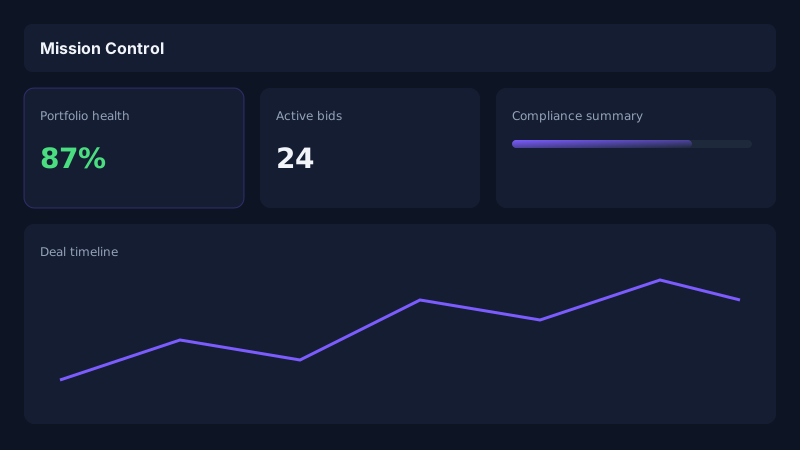
Product tour: Mission Control, compliance, and commercial intelligence — launch demo.
Product evidence

Related intelligence
Frequently asked questions
Should every file in a long RFP be priced immediately?
No. Separate the files, extract requirements, and review mandatory rows before anyone estimates effort or price.
Interactive product tour
Explore Mission Control and compliance intelligence in the public demo workspace — no signup required.
Try Interactive Demo